

Thanks to Kubernetes, Google Cloud Platform is making inroads into the growing Infrastructure-as-a-Service (IaaS) market. Major enterprises such as Spotify and HSBC have already jumped on board. With the right implementation partner, digital publishers of any size can control costs, improve performance, and gain transparency.
We spoke with Nils Müller, lead developer and cloud expert @STRG, about his experience with the latest cloud migration projects.
STRG.magazine: What is Google Cloud Platform, and how does Kubernetes fit into it? And by the way: how do you actually pronounce Kubernetes?
Nils Müller:People say “every cloud has a silver lining,” and for Google Cloud Platform [GCP] that would be Kubernetes – I think it is [pronounced Koo-burr-net-eez [from the Greek word κυβερνήτης, meaning “pilot”]](https://www.youtube.com/watch?v=uMA7qqXIXBk), but we hip techies shorten it to “K8s.” Google is gaining increasing market share in the Infrastructure-as-a-Service business and is now an affordable and excellent alternative to AWS [Amazon] and Azure [Microsoft]. This is largely because Google first developed K8s and then transferred control of ongoing open-source development to the Cloud Native Computing Foundation. In general, IaaS allows a company to outsource its data center operations to the cloud and free itself from the burden of buying and maintaining its own server hardware. IaaS offers even more flexibility than renting servers in a managed data center. And K8s helps developers take IaaS to the next level by automating application deployment, horizontal application scaling, and system monitoring on GCP.
STRG.magazine:So all you have to do is upload all your software and data from your existing servers to GCP and then go for a beer?
Nils Müller: [laughs] No, it is not quite that simple. Migrating your platform from an on-premises or managed network to GCP still requires a great deal of planning and preparation, as does adapting K8s to automate administrative maintenance. This is where STRG can help, but once we have brought a GCP system online, administrative overhead and the associated costs drop substantially.
STRG.magazine:That should make any CFO happy. Bonuses all around, right?
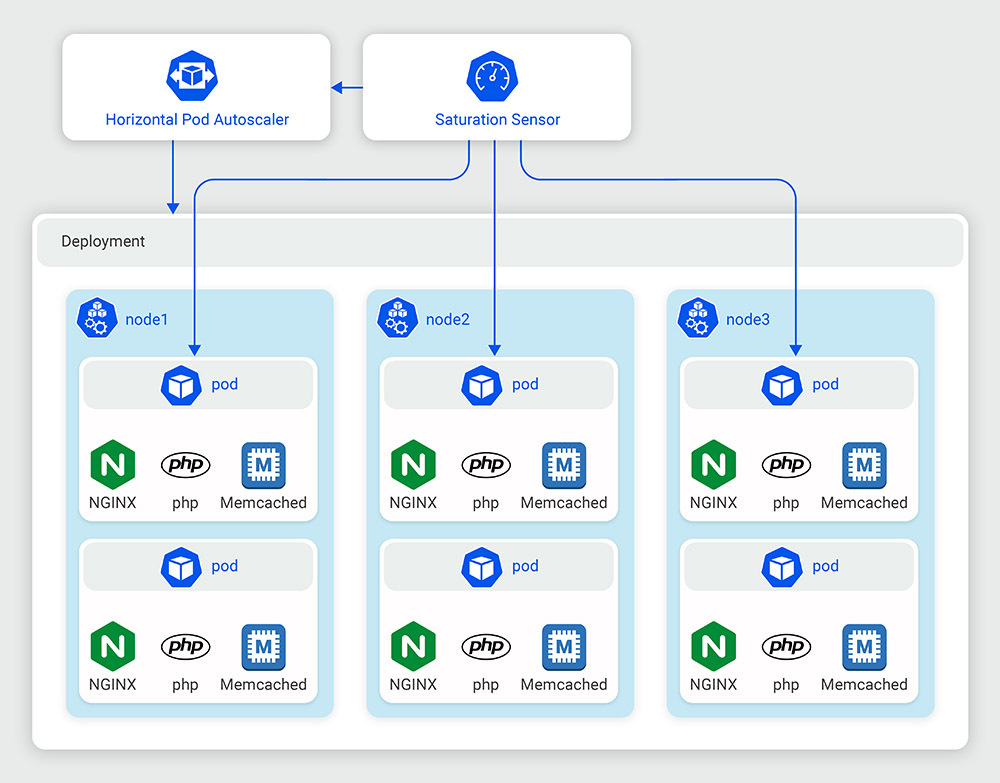
Nils Müller: Maybe! With GCP, a company does not pay for its own physical hardware and its maintenance, but only for the data resources it needs at a given point in time. If a company needs to scale its data estate up or down quickly, adapting its own data center would be very difficult and costly, but GCP can be set up to provision the required resources on demand. Of course, some advance planning is needed to define the parameters for automatic scaling, but K8s makes this much easier and enables you to identify and avoid potential problems before they can develop into major failures.
STRG.magazine: What kinds of problems are we talking about? Lightning strikes, bad hair days, and other acts of God?
Nils Müller:Ha, more like problems resulting from inconsistent database queries – traffic spikes, slow performance, crashes, caching limitations, downtime during application deployment, and so on. But we also see a major advantage when developing a system architecture for a client. This usually happens in three stages – integration, testing, and production – and each of those would require its own expensive machine, which would sit idle most of the time. Now we can migrate all three stages into the K8s cluster, so we have the additional resources available whenever we need them, and when we do not need them, they are transferred to the production system.
STRG.magazine:Is it true that you once implemented a GCP solution that actually turned water into wine?
Nils Müller: In a way, yes! In 2015/16, we implemented our STRG.CMS for Niederösterreichische Pressehaus, which publishes two print newspapers [NÖN and BVZ] in dozens of regional editions as well as three digital news platforms [noen.at, bvz.at and nitelife.at]. We centralized all digital publishing under one roof, so to speak. As we gradually added more advanced features such as multi-channel output, semantic web analytics, and tools for data-driven publishing [[read STRG’s case study on the project here]](https://www.strg.at/portfolio/non-case-study/), we became frustrated by the unstable performance of the websites and the difficulties in scaling. Originally, the project was built on a set of servers that all contained the same software. It was very hard for us to see what was going on inside – everything was simply packaged into one large piece of software that behaved like a super robot, and there were many queries and things running in the background, which made it difficult to determine what was causing the problems. So we began discussing IaaS options with the client and recommended GCP and K8s, because I had already used them in my work with STRG.BeHave and they are the easiest to implement at the outset – at least from a developer’s perspective, there is a low barrier to entry.
STRG.magazine:It may be easy for you, but are the costs of GCP an obstacle for some clients?
Nils Müller: That can be a real challenge. Our client was an early adopter of the GCP solution, so they lacked a suitable reference project. We also had to convince them that the initial investment would pay off later, not only in the form of better performance but also in actual cost savings. Since they had not yet invested that much in their own IT infrastructure, they were also not deterred by the prices.
STRG.magazine:Sure, it is always easy to convince a client to invest in something their customers may not even notice.
Nils Müller:We were able to show them that, after the costly work of migrating the CMS with all its coupled caching layers and APIs, we could bring the ongoing GCP costs under control by using the concept of „Preemptive Nodes“. Some GCP resources for virtual machines are much cheaper, but have the same performance parameters as the premium plans. The downside, however, is that Google only guarantees a lifespan of 24 hours and may shut you down if it needs more resources internally. It may run for a day or a week, but we have no control over whether and when. With K8s, however, we can use this limitation to our advantage. If, for example, we had eight physical or virtualized servers, they might only be idle at night when traffic is low, but we would still be paying for the infrastructure, energy consumption, and so on. With K8s, we can implement sensors that determine how many server resources are needed and shut them down when they are not, for example overnight, or add additional machines when we need more, for example during morning load peaks. We set the parameters, and K8s monitors the workload and takes the required actions for us.
STRG.Magazin: So the customer has a box seat, but only pays for a standing-room ticket! But won’t it still take forever for the customer to see an ROI?
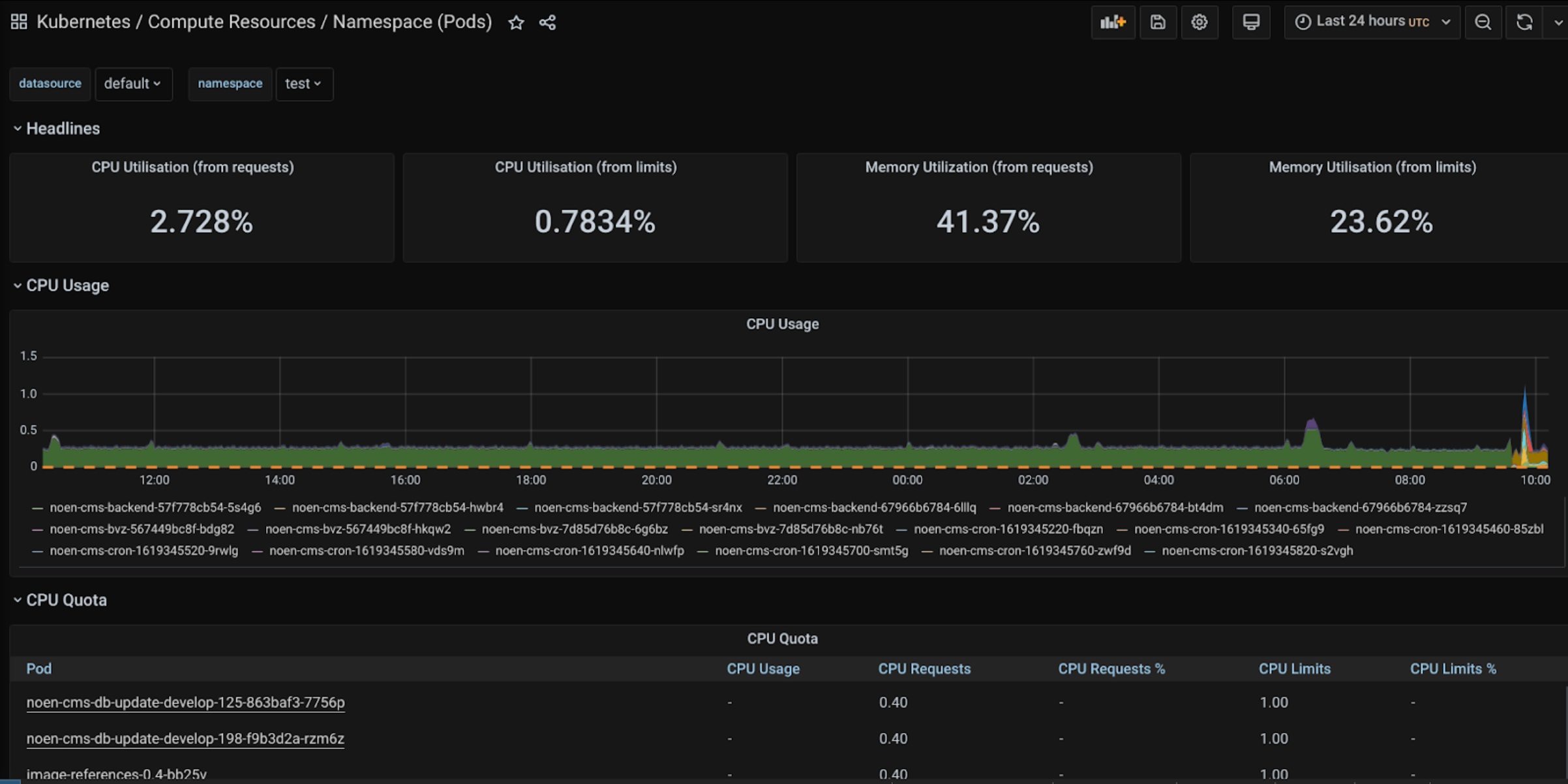
Nils Müller: In the end, our customer’s monthly costs for the cloud-based infrastructure were over 30 % lower than we had originally estimated, and far less than what they would have spent over four years on depreciating and maintaining the hardware. If a customer’s portal has a steady workload and relatively constant usage, then the effort may not be worthwhile. In addition to the potential for long-term cost control, however, migrating to GCP and using K8s as a service offers further advantages. The customer gains a great deal of flexibility to adapt quickly to potential business opportunities – for example, if they want to merge with another portal, increase the number of back-end users, add a new channel, or implement a one-off front-end feature such as a reader survey, a sales promotion, or A/B tests. This would normally cause an abnormal load spike and crash the system, because the database would be overloaded with read and write requests. With K8s, we can automatically allocate only as many resources as are required for scaling, without having to allocate them permanently. With its essentially ready-to-use dashboard, complemented by additional tools such as Prometheus and Grafana, we can monitor and visualize hundreds of data metrics at a fine level of granularity, define action parameters, and plan preventively for pretty much any development scenario the customer wants, or even for one they have not yet considered! This kind of spontaneous flexibility is invaluable in today’s fast-moving business environment, and with GCP/K8s the customer gets it at a favorable price compared with buying and maintaining their own data center.
STRG.Magazin: Especially in the EU, since the enactment of the General Data Protection Regulation (GDPR), many digital platforms and individual users have distrusted the „Great and Powerful Oz“ (a.k.a. Google) and feared becoming helpless servants trapped forever in the Emerald City. Were your customers not paranoid in this respect when it came to following the Yellow Brick Road to GCP?
Nils Müller: If you want to migrate to a reliable and durable IaaS solution, you do not have too many options – either Google, Amazon, or Microsoft. But most customers already use some Google products on their platforms – Analytics, AdSense, AdWords, YouTube, and so on – and are confident that these can be implemented securely. The GCP servers are located all over the world, but you can choose to use only the servers within the EU (most of the ones we use are in Germany) to avoid potential GDPR issues. In addition, Google is already sitting on exabytes of metadata that it obtains from its search engine, Chrome browsers, and Android devices – it could not care less about your „tiny“ portal data, but it loves profiting from your business relationship. However, if our customer has specific data protection requirements, we can design a security concept that meets their needs.
STRG.Magazin: And how does your customer know that you are not just a Professor Marvel telling them not to pay attention to what is behind the curtain?
Nils Müller: Normally, it can be difficult for a customer’s management to derive a tangible benefit from their investment. The frontend may still look exactly the same as before, and the performance improvements may not be noticed by a casual user. But it is like replacing the shock absorbers on your car – externally it looks the same, but it feels more responsive, handles corners better, and is safer at high speeds. Today’s customers demand more transparency from their agency partners. GCP and K8s make that even better. We have a dashboard that logs and displays usage and costs, and that we can easily share with the customer. We want to work hand in hand with them, and not just be their service provider. STRG offers many more products and services than just system architecture and CMS. We develop state-of-the-art publishing tools that use AI, machine learning, and semantic analytics, and we want to ensure that we can always offer our customers something more.
STRG.Magazin:Is there a specific type of company that is most likely to benefit from migrating to an IaaS cloud provider?
Nils Müller:Not only media publishers, but any company that needs flexibility in scaling, especially companies that do not want to burden themselves with maintaining their own IT infrastructure. Because Google has committed itself to the open-source culture with K8s, GCP will primarily appeal to customers for whom open-source innovation is a priority, but who nevertheless value Google’s dominant technical expertise. Cloud providers help you host your application efficiently, whether it is a legacy web application or a system that uses real-time data processing, machine learning such as NLP, or the next generation of AI. You benefit from the extensive knowledge they have in this field. You skip hardware maintenance and operations and leave that to them. Compared with what you get, the costs are low, and to a certain extent any company that wants to reduce its CO2 footprint benefits from outsourcing its data infrastructure. I would bet that in most cases your internal infrastructure cannot keep up with the CO2 footprint of these data centers, because they are designed for maximum efficiency.
STRG.Magazin:I have a feeling we’re not in Kansas anymore.

Nils Müller
former Lead Developer & Architect
I have always had an affinity for technology and started out in Hamburg as a self-taught programming rebel with a passion for automation and simplification. I found my love „from“ Austria and finished school here. Along the way, I was always interested in personal development and deeper knowledge in order to continuously improve my skills. That is also why I started studying computer science at TU Wien. In my free time, I coach my children to help make Austria a great football nation. Or I build and connect environmental sensors in my DIY smart home.