
- CLIENT
- Deutsche Apotheker Zeitung
- SECTOR
- Trade media
- SCOPE
- Data · Subscription · Content
- STACK
- STRG.agents · STRG.behave
Digital-first for a trade publication — user-group classification and personalised recommendations with our own AI models.
strg.at:~$init --driven-by-humans --supported-by-ai
How custom AI models can give a digital publication solutions that move the business directly. How targeting via AI can be thought about very differently — and what becomes possible with reinforcement learning in a reader environment: we got to put all of that into practice on this project.
- AI models
- in-house reinforcement-learning pipeline
- Digital first
- Positioned as a digital trade outlet
- Audience
- Pharmacy professionals identified
- TPU
- Tensor processors in Google Cloud
The starting point
DAZ as a digital-first product — digital subscriptions as the central KPI.
DAZ was to be positioned as a digital-first product and anchored more strongly in its target audience of pharmacy professionals. Acquiring new digital subscriptions was the central KPI.
As with other trade portals, not only people from the industry visit DAZ. Random search traffic from consumers looking for health topics has to be identified — and treated differently editorially and from a marketing perspective than the professional audience. Quality of use matters strategically far more to DAZ than raw traffic. Delivering relevant content offers to the right audience is essential for user satisfaction — and the key to monetisation.
 01
01The challenge
Position DAZ as a digital-first product — and separate pharmacy professionals from incidental consumer traffic within the overall audience.
 02
02The approach
Custom AI models: STRG.agents classifies user groups via reinforcement learning, STRG.behave embeds the archive semantically — entirely without third-party cookies.
 03
03The outcome
Dynamic, personalised recommendations — more engagement, less bias and higher conversion on registrations and subscriptions.
The project goals
Identify professional traffic, recognise pharmacy owners, reduce churn.
From the overall traffic, users belonging to pharmacy professionals had to be filtered out. Beyond that, identifying the very narrow audience of pharmacy owners was on the list — they have very specific information needs. Those users receive matching marketing offers (newsletter sign-up, registration, trial subscription). For consumers the same measures would be pointless — their interest may stem only from a current illness. Personalised content delivery based on momentary interests was a key goal as well.
Unlike targeting based on socio-demographic data, behaviour-based personalisation is much more accurate. Churn prevention was another important target — to retain customers afterwards.
User-group classification
Similarity analysis in multi-dimensional space
Identifying professional traffic is solved through a similarity analysis. The behaviour of known users — those who visit via login, subscription, or newsletter — is captured and processed in a multi-dimensional space through pattern recognition. The patterns are then projected onto the remaining traffic, recognising visitors who, with high probability, also belong to the user group. The technology is built on STRG.agents, which enables data simulation via reinforcement learning. The editorial team and marketing have permanent access to a dashboard of reports. Particularly interesting: the most popular articles in each audience segment. The overlap of topic bubbles with those of the user groups is visualised. Classic analytics tools only measure overall traffic — which would let an editorial team draw incorrect conclusions about demand for specific topics.

Recommendations with STRG.behave
Semantic embedding of the articles
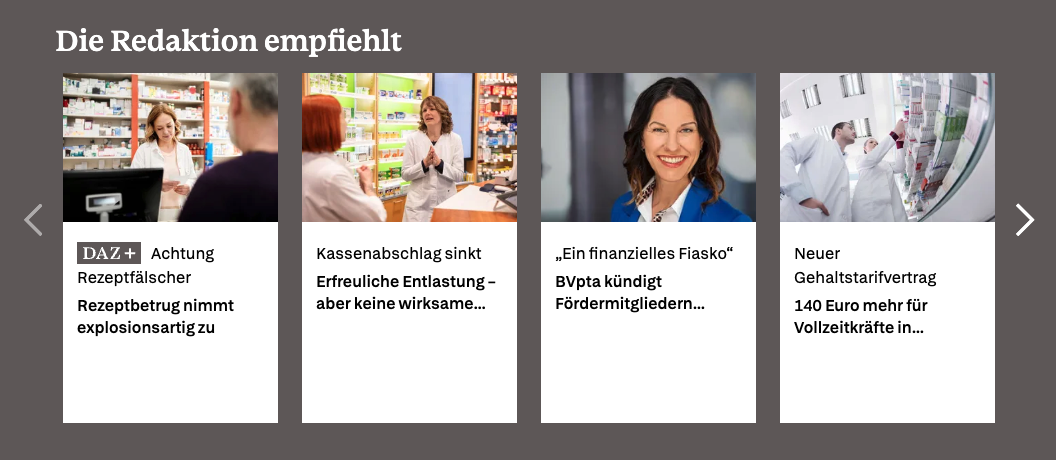
STRG.AT semantically embedded the articles in the DAZ archive — every piece of content vectorised in a multi-dimensional space. Thematic similarity and content proximity can be recognised without the deficiencies of keyword search. With STRG.behave the real, momentary interests of users are measured from their behaviour — without third-party cookies.
The system runs on tensor processors in Google Cloud and is one of the most exciting AI deployments we have seen in digital media.
STRG.agents — the technology behind it
Reinforcement learning, synthetic data, tensor processors.
We deployed a system that was developed in our research department in cooperation with FH St. Pölten and the Austrian Research Promotion Agency (FFG). STRG.agents uses reinforcement learning on the semantically embedded content and reading behaviour — starting from a small group of logged-in readers — to compute membership in different groups.
To counter the relatively small data volume, data is simulated and synthetically generated. The editorial team gets a dashboard in which they can observe reader behaviour and identify the corresponding user groups. The system runs on tensor processors in Google Cloud — one of the most exciting AI deployments in digital media.

Impact
Four effects of the new system
- Personalised presentation
Recommendations come from user-group membership, current interests, and semantic embedding of the archive — targeted reach over scattershot delivery.
- More engagement
Tailored, continuously refreshed content noticeably increases interaction with the platform.
- Less bias
Long-tail consumer traffic is minimised — editorial and marketing see the wants of the core audience much more clearly.
- Higher conversion
Personalised recommendations measurably lift registrations, newsletter sign-ups, and trial / full subscriptions.
With content tailored to pharmacy staff we have built dynamic, personalised recommendations that lift engagement, customer satisfaction, and conversion rates.
The result
Dynamic, personalised recommendations in the pharmacy space.
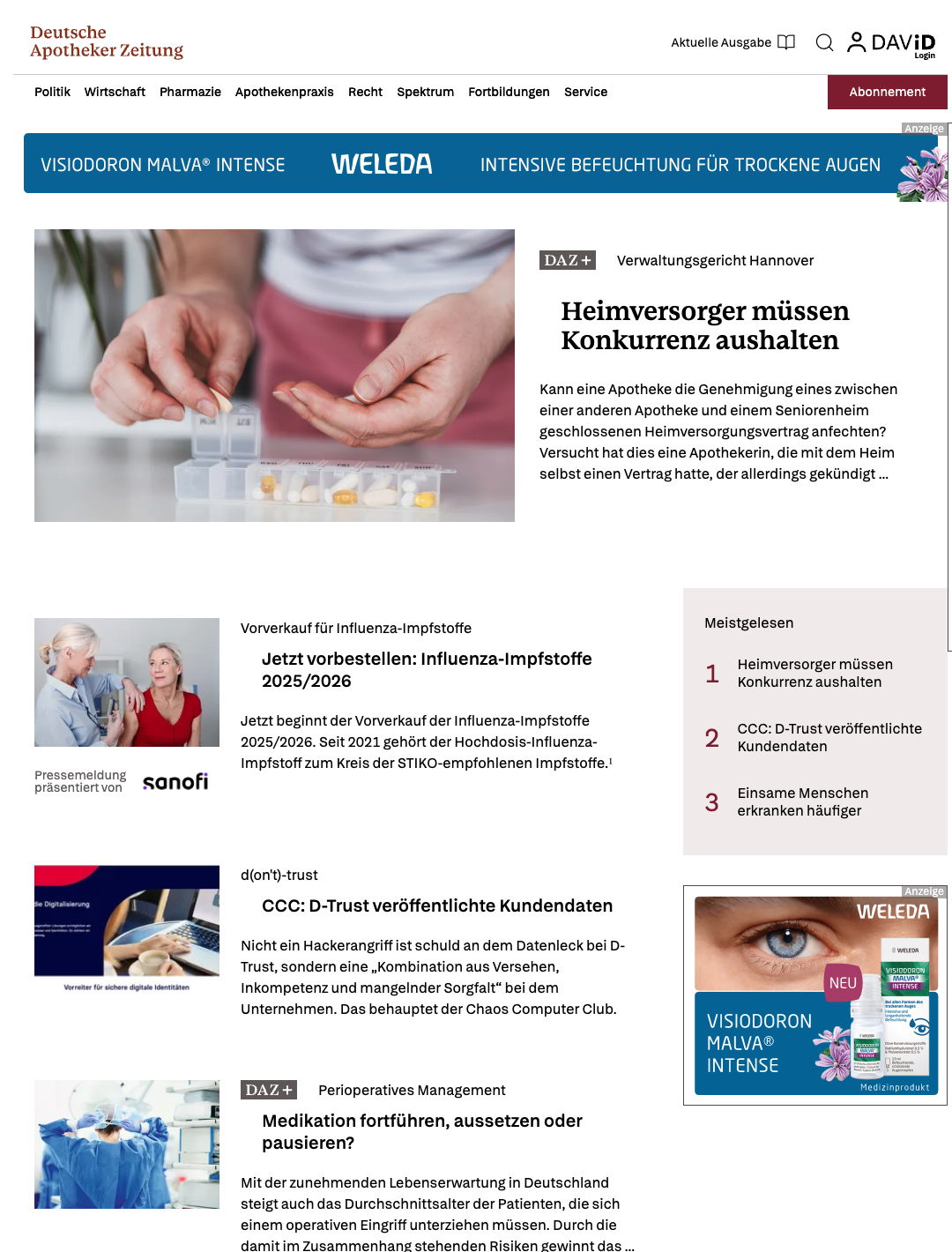
By combining user-group membership, current interests, and the semantic embedding of the archive, recommendations are presented dynamically and personally in a "You may also be interested in" box. Pharmacy professionals see tailored content continuously — which in turn raises engagement, customer satisfaction, and conversion (registrations, newsletter sign-ups, trial and full subscriptions). Long tail consumer traffic no longer biases the picture — giving editorial and marketing a clearer view of what their actual customers want.
magazine
Weiterführende Informationen
Lesen sie hier von unserem Team zu den Themen von künstlicher Intelligenz und neuronalen Netzen in digitalen Medien.




Let's talk about your project
Want to genuinely reach your specialist audience?
We help trade publications build their own AI models for audience identification, personalisation, and churn prevention — built on STRG.agents and STRG.behave.