

We are very pleased to announce that STRG is now an official Flux adopter. As part of our ongoing commitment to providing stable and maintainable cloud-native applications, we have incorporated GitOps principles into our STRG.behave-project and use Flux extensively. What began as an internal initiative has now expanded to our customer base. With the latest iteration of Flux, we have successfully migrated several customers to Flux and provided them with the most stable operational framework we currently know.
A look at the technology we use
At STRG, we are dedicated to using new technologies and thereby improving our services. Kubernetes is an open-source container orchestration system developed by Google that has been an integral part of our operations for years. Its features for scaling, managing, and deploying distributed software in computing clusters are intended to improve reliability, security, and scalability. These include capabilities such as self-healing, rolling updates, and automatic failover to ensure application availability. We have been using this technology for years. As part of this continuous improvement process, we discovered Flux.
In addition to the industry standard Kubernetes, Flux provides an additional layer for managing the cluster state from one or more Git repositories and ensuring continuous reconciliation in the cluster. With this additional layer, Flux further enhances Kubernetes. This integration enables Git-based workflows and fits seamlessly into other automation tools such as GitHub Actions or Renovate . In addition, Helm, a package manager for Kubernetes applications, can be easily integrated into Flux and provides versioning and rollback capabilities for software deployments. This allows the system to be restored to a stable state if there is an issue with the most recent changes.
For more information about Flux:
Implementing the Flux toolkit has many advantages. It provides a standardized approach to deploying, operating, and configuring software while ensuring greater stability and reliability. This results in a smoother, more reliable experience for everyone involved.
The successful introduction and customer integration of Flux would not have been possible without the tireless commitment and expertise of Team Infra, which led the operationalization of Flux in our customers’ workflows. With their deep understanding of cloud-native technologies and their proactive approach to innovation, they played a decisive role in driving this initiative forward. Jasmin Müller (Team Infra) highlighted the benefits of implementing the Flux toolkit and emphasized that it provides a standardized approach to deploying, operating, and configuring software. Müller pointed out that this approach ensures greater stability and reliability, ultimately leading to a smoother and more reliable experience for everyone involved.
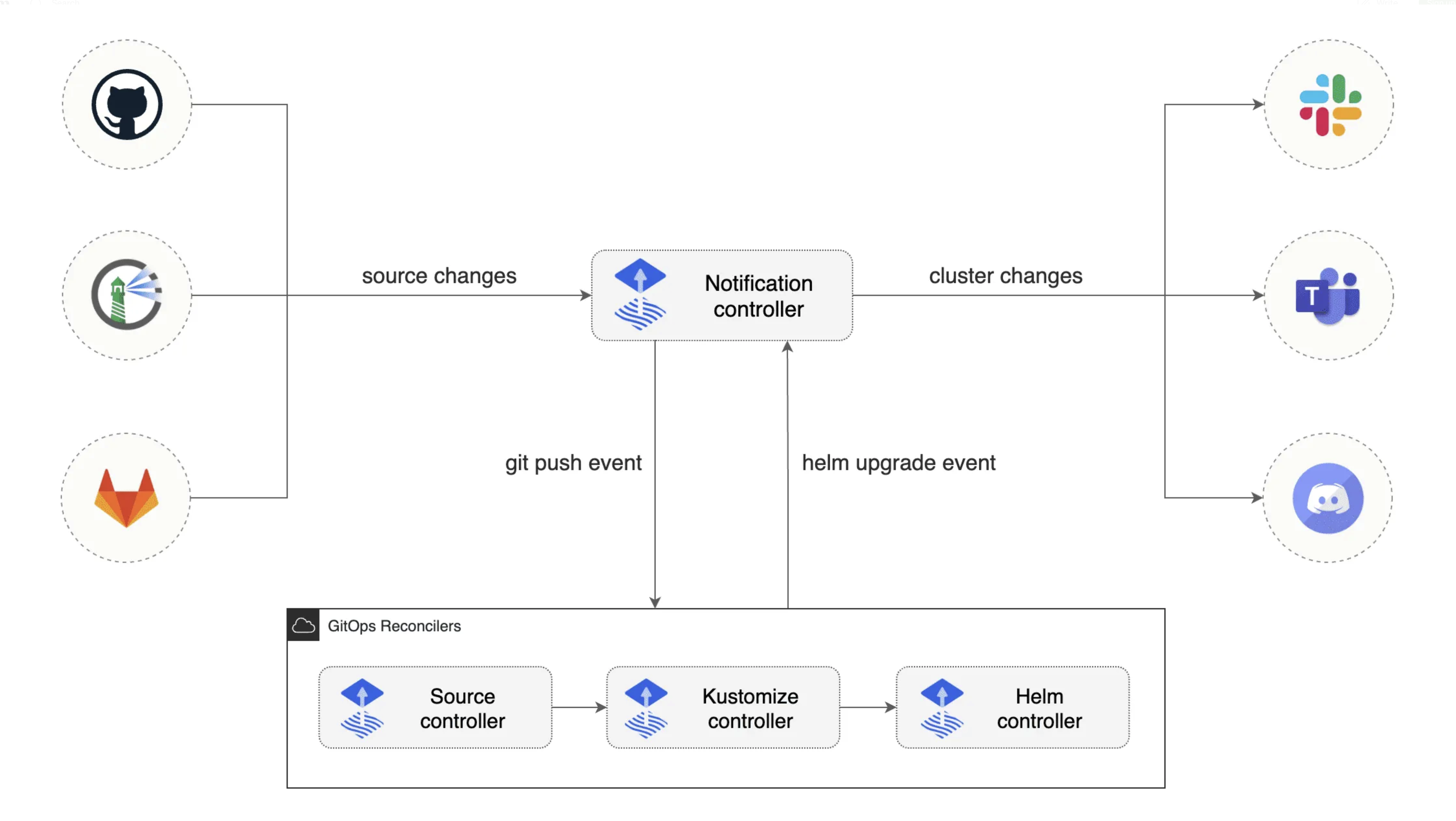
Take a look at this useful guide:
Enabling customers to use the full potential of Flux
For our valued customers, this means greater reliability, scalability, and flexibility for their applications. With Flux in our toolset, we can deliver updates and improvements precisely and quickly, reducing downtime and improving the overall user experience. The transparency and traceability of changes through Git give our customers better control and visibility over the lifecycle of software applications. As industries adopt cloud-native technologies and digital transformation, Flux is becoming a cornerstone for those who want to succeed in the modern era of technology-driven enterprises.