

STRG attended Europe’s largest open-source conference, KubeCon + CloudNativeCon Europe 2023.
Under the motto “Community in Bloom”, or the flourishing community in German, this year’s KubeCon took place in Amsterdam. The leading conference of the Cloud Native Computing Foundation brought together adopters and technology experts from leading open-source and cloud-native communities in Amsterdam from 18. bis 21. April 2023. The STRG team was on site with Jasmin Müller, STRG’s DevOps Engineer, and Nils Müller, STRG’s IT Consultant & Cloud Solution Architect.
The RAI Exhibition and Convention Centre was fully booked this year. More than 10.000 visitors were on site, and over 2.000 visitors were on the waiting lists. Many more interested participants followed the conference via the streaming platform provided. And for all other viewers who could not attend either online or in person, the talks were recorded and made available on various platforms (such as YouTube). The growth of the community is also reflected in the statistics: 58 % of participants attended KubeCon for the first time.
All keynotes and group sessions are available on the CNCF YouTube channel
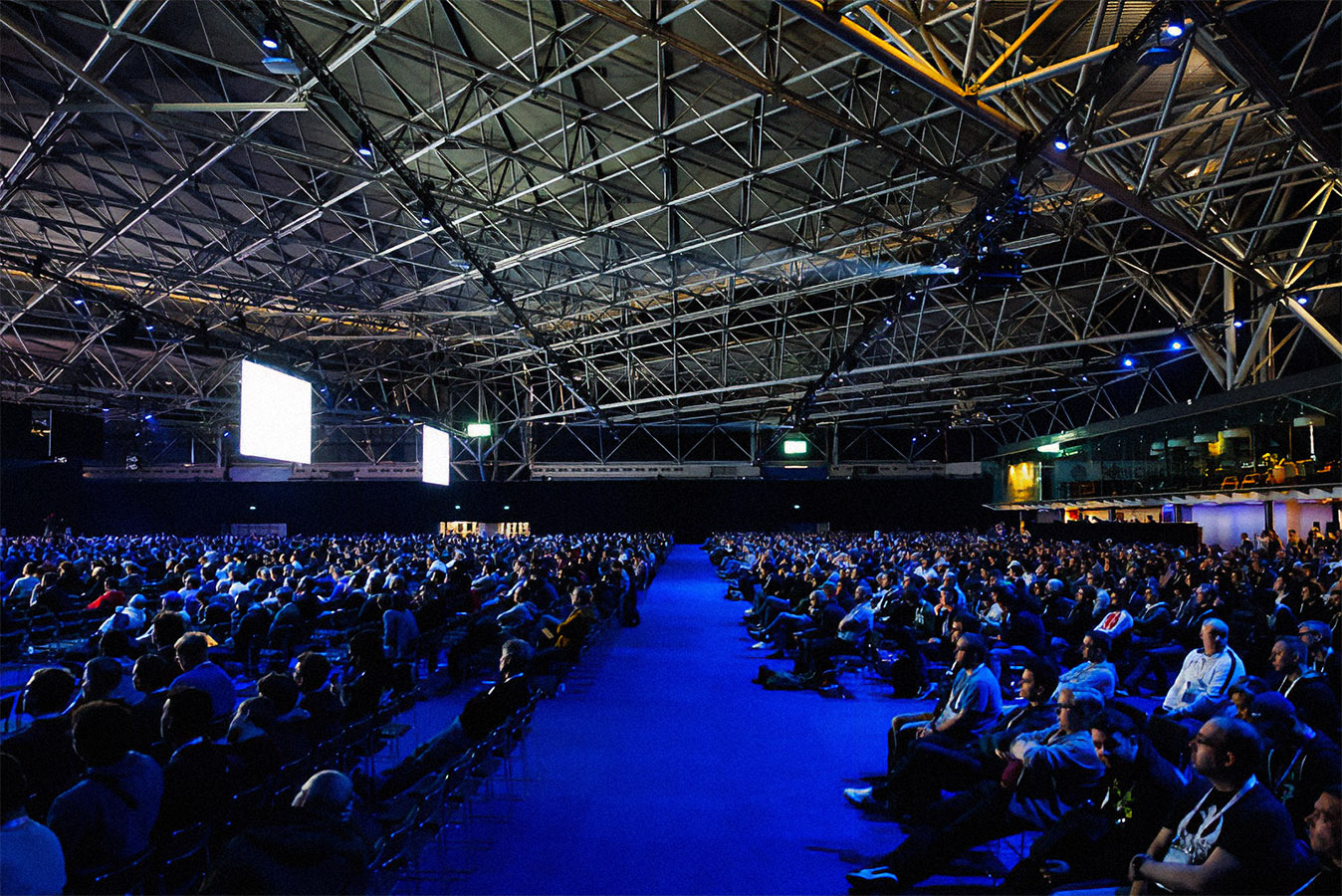
The conference focused on Kubernetes and the growing service and application ecosystem. The talks covered a broad spectrum of topics, from the latest updates for Kubernetes to innovative use cases and best practices for managing cloud infrastructures.
Our highlights
Green IT is also an important topic at KubeCon this year. It is no longer exclusively about cost optimization and cost reduction in FinOps; for the first time, resource optimization as a response option for CO₂ emissions is also being actively addressed and discussed.
Overall, FinOps was strongly represented, as numerous services have emerged in recent years to keep the costs associated with cloud technology in view and continuously reevaluate them. A good summary of Kubernetes for FinOps is available here.
A very successful topic that the audience appreciated was the future of WebAssembly. This is a new technology that enables developers to write applications in any programming language and run them securely on any platform. The possibilities of WebAssembly are endless, and it was fascinating to hear how it could be used to create faster, more efficient cloud applications.
A very interesting talk was given by CERN, the European Organization for Nuclear Research. They reported how they accidentally deleted their production clusters during a “cleanup”. This talk was particularly insightful because it showed how important it is to have a well-considered disaster recovery plan. A testament to the resilience and flexibility of Kubernetes as a platform, presented byRicardo Rocha, Computing Engineer, CERN, and Spyros Trigazis, Computing Engineer, CERN.
eBPF was also an omnipresent topic. This is a new Linux kernel technology that enables developers to monitor network traffic in real time. Cilium, a popular eBPF-based networking and security solution, provided insight into its current development. But eBPF also has other use cases, such as live monitoring of applications. This could revolutionize the way we monitor and manage cloud applications, making them more secure and more efficient.
An interesting talk was given by Stefan Prodan, developer of Flux, who works for Weaveworks. In his talk, he demonstrated how OCI registries (the container storage location) can be used as the source for all Kubernetes assets (images, manifests, Helm charts, …). This is even possible without violating GitOps principles. The main use case is to reduce potential sources of error and accelerate the development and testing of manifests.

Another talk by Claudia Beresford, Senior Engineer at Weaveworks, showed an interesting use case for micro-VMs based on LiquidMetal, a Weaveworks technology that brings Kubernetes to edge devices. Micro-VMs running Kubernetes combine the best of both worlds by combining isolated environments and resource limits with container technology.
Trending
One trend that emerged was the shift toward full platform teams. These teams place developers’ needs at the center of their work and treat developer teams like customers. They provide infrastructure and tools to accelerate and optimize software development without overwhelming especially junior developers with the complexity of Kubernetes. This trend underscores the importance of building collaborative, cross-functional teams that drive innovation and continuously increase business value.
Other key trends at KubeCon Europe 2023
As in previous years, KubeCon Europe again proved highly successful in 2023, bringing together thousands of new visitors and subject-matter experts from the cloud computing industry. Exciting use cases were presented, diverse experiences were exchanged, and industry-wide networking was once again strengthened.
The conference offered an excellent opportunity to gain insight into the latest developments in the market, as well as to network and collaborate with technology enthusiasts. We can hardly wait to attend the next KubeCon in Paris 2024 and see what the future of cloud computing brings.
What is Kubernetes? Nils Müller explains in a detailed comparison! Click here to learn more.