
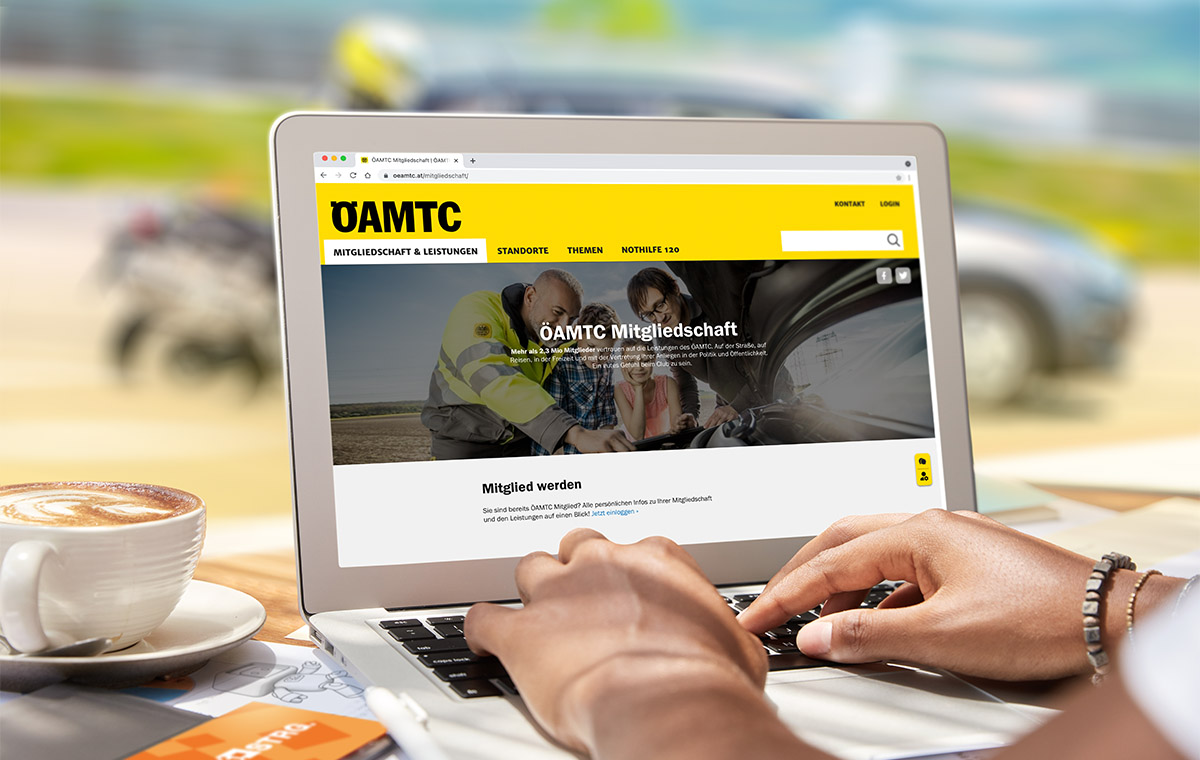
A transformative partnership
STRG has earned the trust of ÖAMTC since 2013 by working with ÖAMTC to develop a strategic concept for digital transformation, launch an online version of the print magazine for automotive tourism, maximize topic leadership, optimize internal knowledge management, and implement several successful digital products and services. Our partnership is based on a solid foundation of trust and transparency and continues to evolve. Our work with ÖAMTC is a foundation for how we collaborate with our clients.
The ÖAMTC (Austrian Automobile, Motorcycle and Touring Club) is an independent, non-profit association dedicated to mobility and travel opportunities. To date, ÖAMTC has more than 2,3 million members who rely on its expert services in road safety, travel, leisure, and other general services. Originally founded as a bicycle and automobile touring club at the end of the 19th century, the club has evolved as mobility has changed. Looking to a future in which traditional modes of transport will certainly no longer work (e.g. through self-driving electric cars, lower overall car ownership, data-driven vehicle maintenance, etc.), the club is ready to evolve further and focus more on mobile people than on their vehicles. Structurally, the national club is an umbrella organization comprising seven regional associations. ÖAMTC is financed exclusively through membership fees and revenue from its various services (travel agency, financial services, insurance, etc.) and receives no government subsidies.
The beginnings of our long-term partnership
The association originally commissioned STRG with the conception and implementation of a digital strategy for its magazine auto touring. Designed as a “mobility lifestyle magazine”, the print edition is published eleven times a year and sent to all ÖAMTC members. With a circulation of around 2.800.000 readers per issue, it is Austria’s highest-reach motoring magazine.
Together with the Autotouring team, we developed a detailed concept that enables the content to be published in a polished digital format. The first step was to create a publishing engine based on STRG.cms, which can format articles in 1.400 different layout combinations. It was also necessary to adapt our out-of-the-box CMS solution to the company’s internal systems, including the SAP back-office system.
The online version of auto touring was launched in 2014-15 and received excellent feedback. “ÖAMTC saw that we had passed the test, that we listen, and that we are able to translate its ideas into a solid digital communications strategy,” says Michael Dosser, COO of STRG.
ÖAMTC decided to work with STRG to relaunch its entire web portal and redesign its external and internal communications.
Thematic leadership role
ÖAMTC, which has traditionally focused on vehicle mobility, is aware that the sector will change radically over the next 10 to 15 years. The external communications strategy needed to reflect this in order to secure the association’s central role in the future.
STRG did more than “just” implement a software solution for publishing. We helped the editorial team rethink its entire content strategy. “ÖAMTC benefited from a thematic leadership role in Austria, which, however, was not really being fully used,” Dosser recalls. “They had created a large amount of excellent original content, but we saw no connection between the content and the marketing of their products and services.” Dosser and his team found that “many articles had very similar content – quite a self-inflicted problem from an SEO perspective. Before we digitized the existing print content, we reviewed thousands of articles and concluded that only a few hundred were aligned with their core topics and SEO-friendly.The rest had to be rebuilt from the ground up.”
Instead of simply indexing the existing print articles, we helped the editorial team break down the content of the articles into core topics and then standardize the structure of each topic so that every topic was contained in its own directory. A professional editor from a major Austrian daily newspaper was brought in to rebuild the content from the ground up together with the club’s editorial team and enhance it with graphics, videos, and slideshows. To maintain a consistent tone across the many projects, we developed a general style guide that serves as the basis for all future concepts. Together with the editorial teams of the individual service areas, we organized extensive workshops and drove the planning forward to map out a “content-to-service-to-product” path across all levels. This editorial consulting, combined with a consistent visual concept, led to rapid implementation of the follow-up projects.
From content to product
A major goal of our efforts was to connect the topics with their products and services. ÖAMTC’s central source of revenue is annual memberships, supplemented by other products and services such as travel insurance, travel agency services, vehicle inspection/maintenance, driver training, and the sale of car/travel accessories.
Previously, promotion of the products and services was woven into the website content, but “it was delivered via a third-party ad server,” Dosser recalls. “Anyone with an ad-blocking browser doesn’t see it at all!”
Neither ÖAMTC nor STRG wanted any kind of “in-your-face” advertising. Instead, we opted for a content marketing strategy in which we integrate calls to action into the content itself via links to products and services accessible only to members. To maximize traffic to the website, a strict paywall approach was avoided. Instead, the content was intended to guide the occasional visitor subtly toward the products and services on offer.
We also integrated the travel agency services into the digital content, so that personalized and context-dependent offers are displayed across all areas of the site. This led to a doubling of online travel bookings and significantly stronger e-commerce activity on the pages.
Turning visitors into members
Because ÖAMTC’s main source of revenue is annual membership fees, a primary objective behind all our implementations was to turn casual visitors into new members, and in turn to turn existing members into active consumers of its products and services. While excellent content brings traffic to the site (mostly from existing members), our multi-layered strategy was designed to move visitors toward further engagement:
1. Level: For the user who visits a page but has not registered or logged in, product offers and additional content are displayed according to their navigation behavior;
2. Level: Get a user to register or log in (simply by providing their email address), and push content that encourages them to become a paying member;
3. Stage: get an active member to log in in order to benefit from special products and services reserved exclusively for members.
With this approach, we were able to gradually build visitors’ trust and turn them into customers.
One platform for every purpose, internal and external
By structuring the portal around SEO-friendly core topics, traffic increased and visitors gained trust in the portal as a leading source of information on mobility issues. In addition, STRG was able to implement a solution for ÖAMTC’s internal knowledge management – an intranet portal that mirrors the content of the public platform.
For internal use, the public information was indexed like Wikipedia pages – less glossy and eye-catching, but better organized and more practical to access. “We also linked it to the member data from the back-office systems,” says Dosser, “so that an intranet user”, e.g. a customer service representative, “can see a member’s interests and activities, which services or products they have purchased, and what upselling opportunities there might be. It is a platform for the entire organization, with access rights assigned as needed and fully integrated into its own infrastructure.” Overall, the system was well received across the organization and now acts as a central information and communication platform, serving not only the editorial staff but also the call centers, service locations, travel agency, and affiliated partners.
Integration of additional services and products
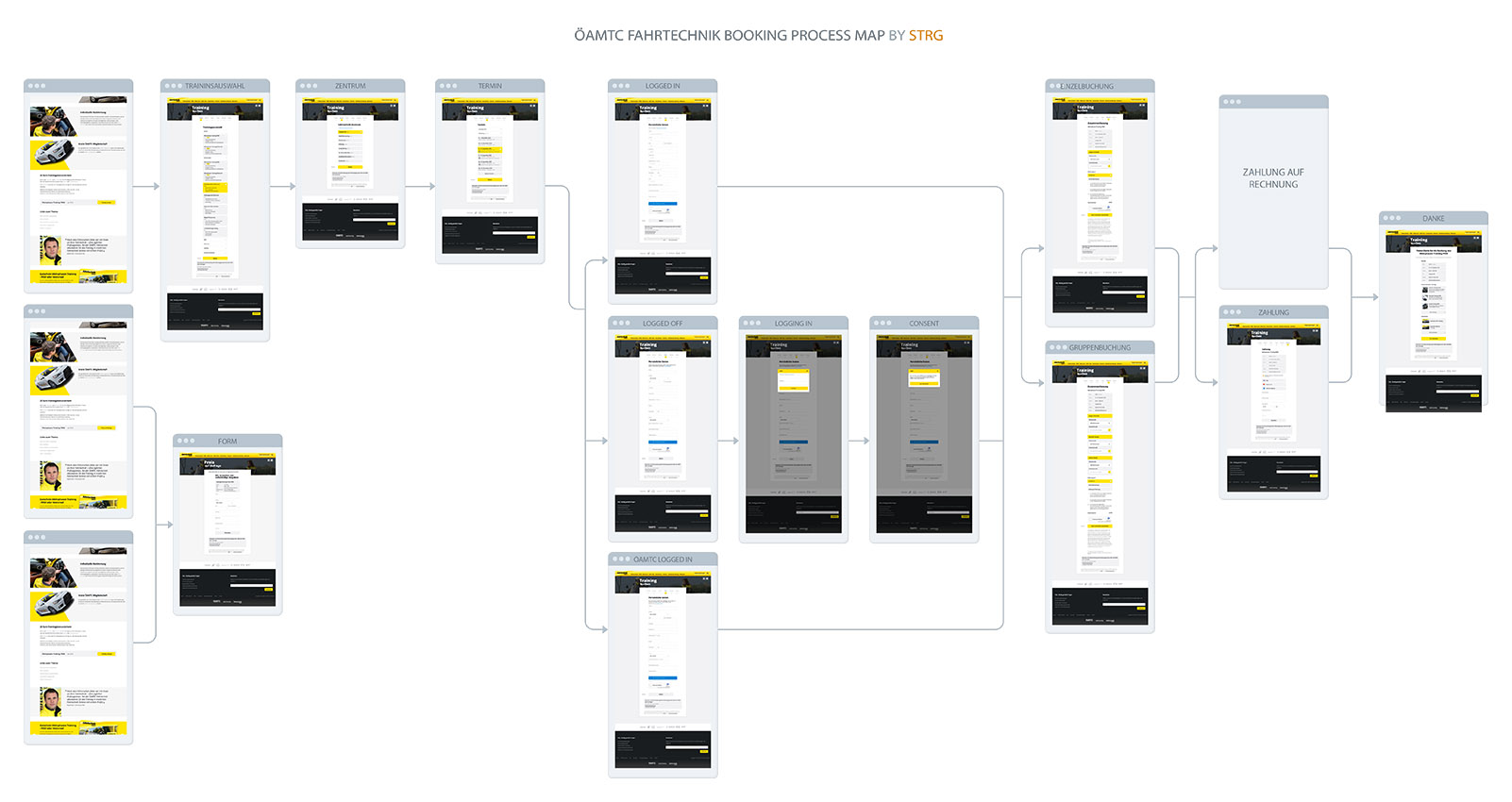
One of the many products offered by ÖAMTC is driver safety training, which is delivered in training centers throughout Austria. The courses range from practical training for a basic driver’s license to intensive courses for high-speed, poor-weather, and off-road driving (for cars, motorcycles, and oversized vehicles). The customer spectrum ranges from complete beginners to professionals.
Our task was to set up a standalone website with compelling multimedia content intended to encourage both members and non-members to register for courses. However, it was equally important that the standalone website be integrated into the main portal, both graphically and through content linking.
This enabled integrated cross-marketing across all platforms. For example, if a member logs in on the main site to schedule their annual vehicle inspection, they could receive a teaser promotion for driver safety training, and vice versa. Or an Autotouring article about winter tires could include an offer for “Snow & Fun training” (as well as an offer for a weekend ski trip through the ÖAMTC travel agency).
But that is not all!
To date, we have developed more than 20 projects together with ÖAMTC, from internal knowledge management and the intranet for all business units to the club’s classic B2C portals.
We developed a new self-service area of the portal that enables ÖAMTC members to create a user profile, making it easier for them to book ÖAMTC services and products. By entering specific information about their vehicle, ÖAMTC is better able to offer customer-specific products and services.
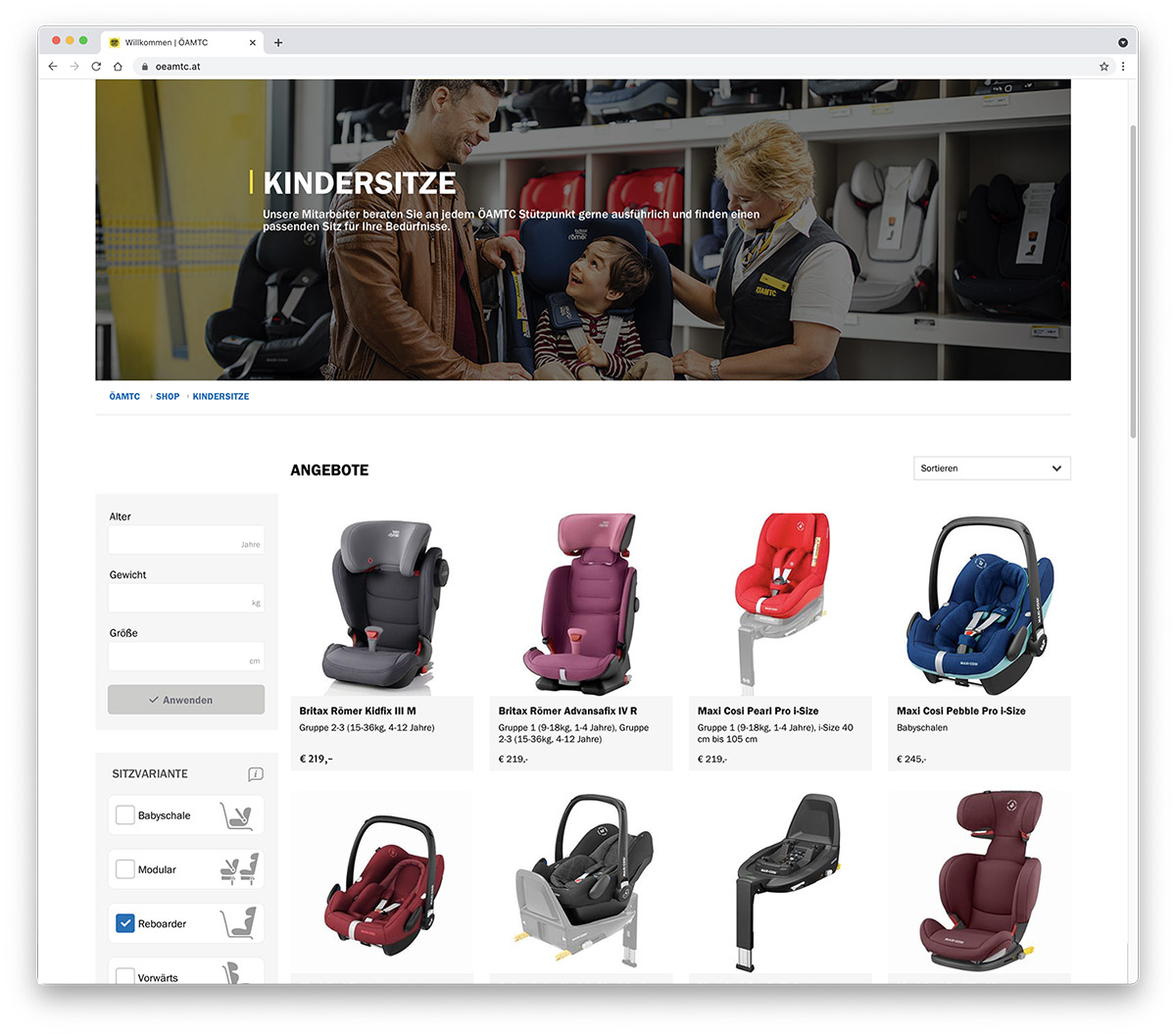
There is currently a “webshop” offering various automotive and travel accessories (e.g. child seats, roof racks, luggage, and road maps), which are sold through the ÖAMTC service locations. We are expanding the platform’s e-commerce functions, which must be fully integrated with the back office SAP systems and member data.
Looking ahead, further projects are currently being developed, including the development of location-specific point-of-interest content, as well as capturing data collected by modern cars and using artificial intelligence to analyze the data in order to predict maintenance requirements and share data with manufacturers.

A model approach for all our clients
Michael Dosser of STRG says: “Although ÖAMTC is one of our largest clients, we go through the same conceptual planning process for all our clients. At its core, it is always about turning visitors into customers – not with “in-your-face” marketing, but with a gentle and engaging content-led approach.” STRG has proven that it is able to work with a large client over several years on multi-layered projects, helping it navigate a future in which the only certainty is the need to adapt flexibly to dynamic change.
If you would like to learn more about how STRG can guide your company into the digital future, let us have a conversation!
Get in touch with Jürgen Schmidt or Michael Dosser.
Addendum: About the architecture
The system we built for ÖAMTC is certainly the most complex implementation of our content management system STRG.CMS and our entire technology stack. In this case, the CMS serves as the central Digital Asset Manager (DAM) for all digitally used content, from the classic but very “playful” articles about car travel and Points of Interest (POI) to the collected knowledge base content and e-commerce products. All content can be interlinked and can also be used across all subprojects. The user management interface accesses the central member management system and continuously exchanges data. Naturally, attention was paid to GDPR compliance, and all processes were mapped accordingly. To manage the individual areas of the portal, editors themselves can access most workflows and user journey data. A WYSIWYG editor provided for this purpose enables automated and/or manual editing. The system has 12 upstream systems connected via bidirectional interfaces. A dedicated Content API was developed for delivery from the DAM in order to run the entire system headless. Since 2016, the frontends have been implemented with VUE.js, resulting in a more intuitive user interface and system distribution across the server environment. Because of its overall scale, ÖAMTC operates its own data center, where all services are hosted and operated.