

Our specialist expertiseis our product
It is expert knowledge that comes from intensive research as well as from human and machine learning. We may refer to STRG.CMS or STRG.BeHave as our „products“ and call some of our agile employees „Product Owner“, but in reality STRG produces nothing that can be put into shrink-wrapped packaging and sold over the counter. We offer neither downloadable applications nor white-label web services. Nor do we publish a price list with our standard fees or package prices.
So what do we do? A $ch#!+load of research, that’s what! Our research is not aimed at creating a finished product. Instead, it leads to constantly evolving tools with which STRG’s talented teams solve clients’ problems.
STRG is a technology-driven company. Whenever we encounter a challenge that cannot be solved with current technology, we switch into research mode.
From concept to practical tools
One of the first applications of our research work was STRG.CMS, one of the first content management systems to use semantic analysis methods. However, the available tools for creating personalized news content burdened editors with the task of tagging, categorizing, and labeling content. We saw this as a challenge that could be solved using machine learning methods.
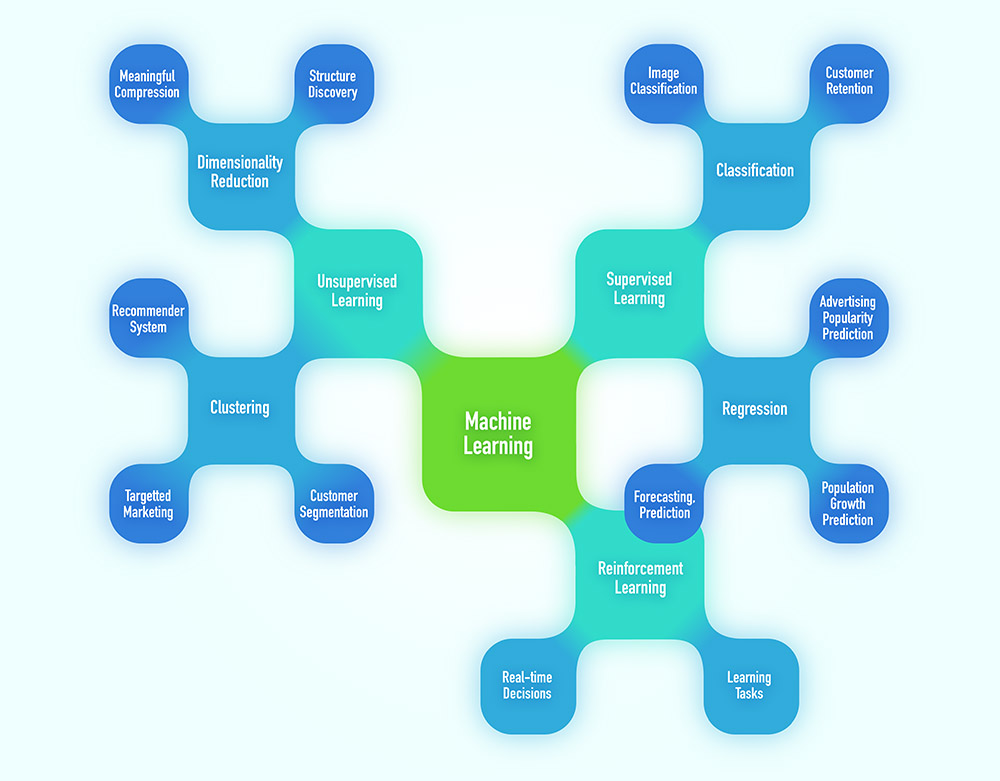
Shortly after the release of Google's TensorFlow (2016), STRG's CEO Jürgen Schmidt had the idea of initiating a research project to go deeper into the field of semantic analysis, including Natural Language Processing (NLP), word embeddings, and supervised learning methods. Originally, the research was intended to result in a product, at least one for internal use. In 2018, the Austrian Research Promotion Agency (FFG) provided the ideal funding – it was aimed neither strictly at research nor at product development. Research continued for two years, and the result was STRG.BeHave.
„Instead of developing a marketable product for others, we developed our own toolkits, which we use internally to develop applications or e-commerce portals“, says Eugen Lindorfer, a Product Owner at STRG for eight years. „We realized that we are not a product company, but a project company. Everyone says you cannot do both, because each requires a completely different organizational structure and mindset. When we changed our perspective from that of a product developer to that of a problem-solving project company, our business really gained momentum.“
„We are not a product company, but a project company. Everyone says you cannot do both, because each requires a completely different organizational structure and mindset.“
While other tech entrepreneurs are always looking for the next killer app, STRG has resisted the temptation to develop plug-and-play software solutions and has instead brought its research-based expertise and know-how to market. „Of course, we could have developed something similar to Outbrain“, says Lindorfer, „but that is only a small part of what you can do with BeHave. If we brought BeHave to market as a product, potential clients would only compare it with Outbrain, which I consider ineffective, especially when it comes to enabling clients to monetize their content. I also do not think we would make much money with a product like that.“
Navigating archive content
One of the first clients to benefit from the FFG-funded research into BeHave was the Austrian weekly newspaper „Die Furche“. While we supported them in the design and development of their online portal we discovered that we could use BeHave’s semantic Natural Language Processing (NLP) toolkit to organize and display their extensive archive content, which reaches back to their founding in 1945.
„We developed a timeline function that they called ‚Navigator‘“, says Lindorfer. „It uses AI-based semantic analysis to automatically categorize and tag both current digital content and older, digitally scanned content – even the poems that have not been published for more than 50 years.“ The elegant timeline slider function improves the reading experience by automatically placing contemporary content in a historical context.
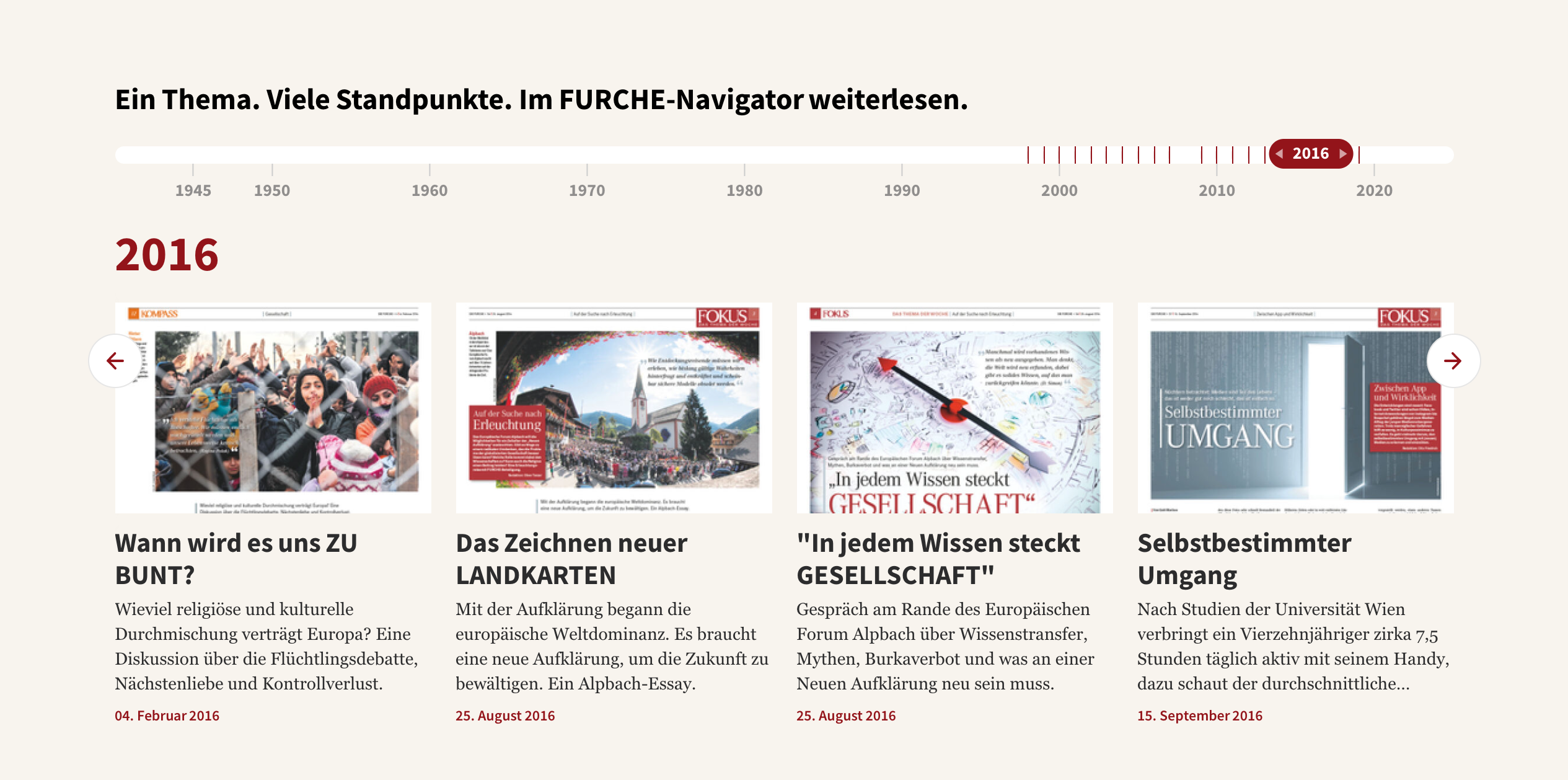
Die Furche has its own talented IT department, which might have opted for a plug-and-play app to enable the display of related content, but this would have required countless hours of editorial effort to manually label and categorize its archives. „We did not get the assignment because BeHave was an off-the-shelf product that we could sell them“, Lindorfer believes, „but because it was a tool that enabled us to tailor their technology to their specific requirements.“
Beyond the news
Thanks to STRG.CMS and BeHave research and development, STRG was able to build a strong reputation in working with clients in digital news media. As we researched BeHave for this market segment, we realized that the various toolkits and packages could also be used in other areas, such as ÖAMTC.
„When we research, we sometimes find solutions to problems we were not even trying to solve“, explains Lindorfer. „Because we do not focus on a specific product as the outcome, our reputation as technology-driven researchers attracts the attention of many clients from different sectors who want a tailored solution for their portal.“
„Because we do not focus on a specific product as the outcome, our reputation as technology-driven researchers attracts the attention of many clients from different sectors who want a tailored solution for their portal.“
Agents of Change
While research on BeHave continues, it has led to a new FFG-funded research project that we call “STRG.Agents”. The idea arose (as so often) from an attempt to solve a problem. One of Austria’s largest mail-order/e-commerce retailers wanted to improve its website’s personalization functions with the kind of product recommendations and automated user interface technologies used by so many e-commerce portals, including Amazon, with mixed results (have you ever wondered why you receive product recommendations for refrigerators even though you have just bought a new one?)
“We wanted to improve this with the semantic analysis methodology we developed with BeHave,” Lindorfer recalls. “We tried to use BeHave algorithms to semantically analyze short product descriptions and relate them to highly structured product data. At first it did not work very well, but then we found out why. The site was very popular in Austria, but it simply did not have the traffic volume to generate a suitable data set. What could we do about that? How could we gain insights into websites that do not even exist? These two questions were the impetus for our next research project.”
After many discussions over wine and coffee, STRG.Agents was set up this year. The “aha!” moment came when we realized that by analyzing user behavior on news portals, we could gain insights for e-commerce platforms – not semantically, but in terms of how users interact with the site. However, strict GDPR data protection regulations prohibit the use of individual user data for unintended purposes. Even so, Lindorfer says: “We realized that it is possible to simulate visits to the website using virtual users, which we call ‘agents’.” Agents is a term from the field of reinforcement learning, an AI technology that enables machines to learn autonomously in any environment, much like a puppy learns new tricks – a combination of actions, rewards and observation.
“We found that it is possible to simulate visits to a website with virtual ‘agents’, which could compensate for the lack of meaningful real user data from smaller web portals or even predict traffic for websites that have not yet been created.”
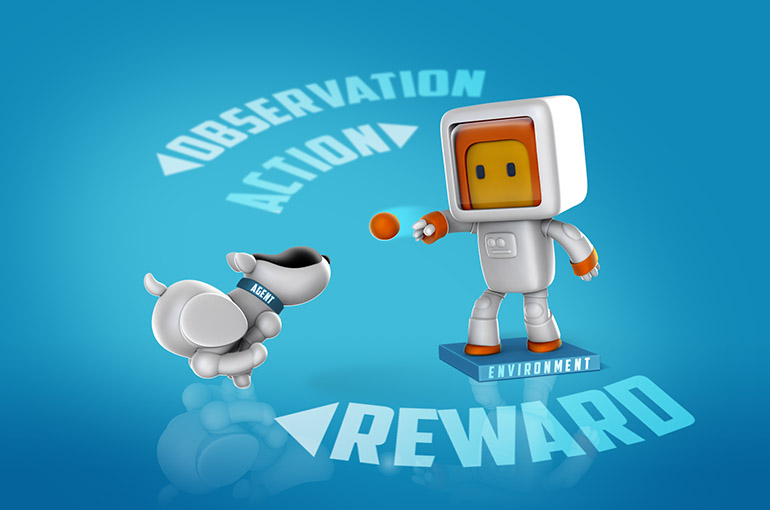
Lindorfer and STRG’s data scientist believe that web portals can be modeled as a directed graph and that user interactions within a web portal can be represented as a Markov reward process containing states (i.e. which web page you are currently browsing), actions (where do I scroll or click) and rewards (based on a limited data set of real user conversions) in order to determine the probabilities of transitioning from one state to the next. Running such a simulation for virtual users could compensate for the lack of meaningful real user data from smaller web portals or even predict traffic for web pages that have not yet been created.
“We still need to translate our Agents research into concrete applications,” Lindorfer concedes, “but we plan to use it to optimize e-commerce portals, not only to improve product recommendations, but also to improve the entire user interface in terms of link placement, how large they should be and so on.”
The research project is divided into several work packages and is funded by the FFG for one year. “Ultimately, we want to be able to create a graphical representation of a web portal automatically by simply entering a URL,” Lindorfer envisions. “But we also want to model pages that do not yet exist and create a drag-and-drop back-office system to adapt learning structures and gain insights into the results of agent simulations.”
Reaping the fruits of our research
Of course, constantly evolving technology can render any long-term development project obsolete before it is completed, which means that Agents research is being applied ad hoc. STRG’s CEO, Jürgen Schmidt, says: “You cannot wait until something is fully mature before bringing it to market. Agents will require at least two years of development time, but as early as 2022 we will begin applying some modules to our ongoing projects.”
STRG’s research cannot focus only on short-term goals. “A company looking for software to automatically classify images approached us for a custom solution,” Lindorfer recalls, “but before we could finalize the contract, they found a new off-the-shelf open-source solution that matched their requirements perfectly.”
Although Lindorfer considers it unlikely that reinforcement learning will be replaced by something else in the foreseeable future, neither he nor STRG’s data scientists can always find the time to keep up with all current and future developments. “In this field, algorithms and libraries are constantly in flux. That is why we have a partnership with the Austrian University of Applied Sciences St. Pölten. These young academics have the time to attend all these highly specialized conferences and keep us up to date. For example, we normally use the TensorFlow and PyTorch frameworks to implement machine learning, but a researcher from St. Pölten learned at a conference that Google had just released the JAX framework.”
At the moment, Facebook and Google are making some machine learning software libraries available as open source. But if they are allowed to monopolize the market, you know they will eventually monetize it. “We cannot leave this research to these large companies,” Lindorfer warns, “otherwise we will become too dependent on them. They are not interested in improving the world, but in dominating the market and making a lot of money.”
By focusing on forward-looking research rather than product development, the insights STRG gains can always be applied to something entirely different from the original goal. It will never be wasted effort.
If the problems of smaller e-commerce companies can be solved with the help of STRG.Agents research, the same technology could potentially also be used to solve larger societal problems such as clean energy and the global supply chain, helping to level the playing field between global trade monopolies and local SMEs.
If you would like to know how STRG research can support your existing digital business or help plan your digital debut, please contact us!