

A conversation with Managing Director Jürgen Schmidt about „New Normal“ and the impact of the pandemic on the workplace, because at STRG, „business as usual“ always means being agile.
During the pandemic, STRG decided to move into new, smart and modern office space in the popular 7th district of Wien. A smart move, or did you somehow regret it?
No, I think we did the right thing, and I would do it the same way again today.
Were you not concerned that the team might not return to the office? It is no fun paying rent for empty desks.
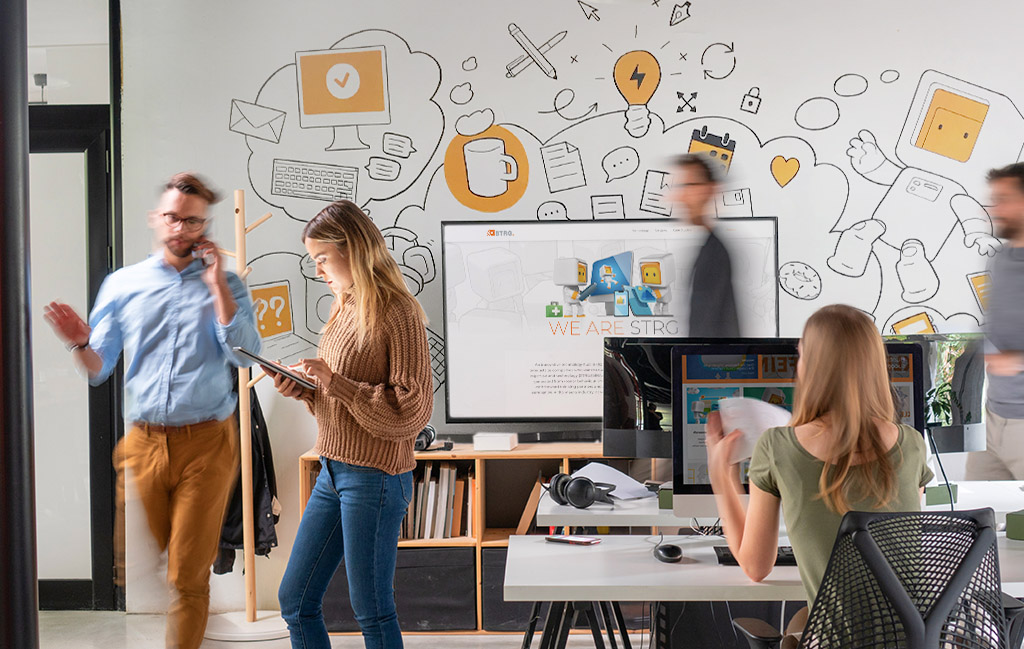
I knew we would return to the office, but I quickly realized that we would not return to the same structure and setup as before the Covid crisis. STRG’s agile working structure had already helped us prepare for the „new normal“, and we had already discussed switching to what is known as „Activity-Based Working“ (ABW), which was first mentioned by the American architect Robert Luchetti in the 1970s and is still discussed by companies such as IBM today.
For STRG, ABW means that our office is used for meetings and creative sessions, while individual work is done remotely. In the first half of 2020, this worked very well for us, but nobody realized how much management work it required behind the scenes. While our new office was under construction, we had no physical workplace … but that was never a problem. Our new office space is even smaller than before, but our headcount continues to grow. That may sound contradictory, but thanks to the lessons we learned from the pandemic, we do not plan to create more space despite our growth.
Looking back, would you have designed the office differently from a construction perspective?
No, not substantially. We created a large conference room on one floor, but we will not be holding conferences for more than 30 people any time soon. Instead, we have repurposed it as a research lab. When I looked through our old calendars, I found that we had only really needed such a large room three times in six years. My business partner and I agreed that, in future, we will simply rent a good conference room when we need one.
What is the value of going back to the office at all? Why can’t we simply work from home, virtually?
Being together is essential for building a unique and sustainable corporate culture. You do not have to be in the office every hour of every working day for that (as I already mentioned), but face-to-face interaction is still very important. Many of us also appreciate the opportunity to work in the office simply to have a break from home. I, for example, work in the office two or three days a week and remotely the rest of the time. When I have my first coffee in the morning, I appreciate having the choice.
What did you miss most when everyone was working from home during lockdown?
The social interaction. Every year we organized a company outing to the mountains. What I liked most was the Friday evening get-together, where we could talk informally about things we would never discuss in the office.
It is very important to get to know your team members personally. We respect each other’s privacy, but if you know that a colleague, for example, has a six-month-old baby at home, you can better understand how that may affect their work.
During the first lockdown, we tried to virtualize our social interactions as a group. We even livestreamed joint cooking sessions! It was important for the team to have a few anchor points where they could come together and connect outside the normal business environment, but that works much better when you meet in person.
What strategy did STRG pursue when returning to the office?
When the first lockdown eased in May 2020, we planned to return to the office after the summer holidays. But then the Delta variant forced us to keep things largely virtual.
Originally, we wanted our employees to come back for half-days, but then we decided against mandating this. The result was that our employees voluntarily worked half-days! If employees feel they only have the choice between getting sick or losing their job, they will feel that management has no understanding of their needs.
Has productivity tended to increase or decrease compared with before?
Lorem ipsum dolor sit amet, consectetur adipiscing elit. Ut elit tellus, luctus nec ullamcorper mattis, pulvinar dapibus leo.
Jürgen’s top three tips for leading the workforce in difficult times:
We learned a great deal from the pandemic. There is no going back now, only looking forward and finding new ways to collaborate in order to create a better world for all of us.
Work as agile as possible, even if you are not working in software development. It makes you more flexible, shortens your decision-making time and ensures that you stay true to your decisions.
Take responsibility for the management decisions you make. Trust your team and do not blame them if something does not work out. My mentor, who is now in his 70s, told me years ago: „If you cannot trust your team, YOU made the mistake.“ I objected and told him that I simply could not trust this one employee. He replied: „But YOU hired him. YOU made the wrong decision!“ Responsibility is about admitting your own mistake and not blaming others. That builds trust in all directions and ensures that your employees remain loyal.
If you ask your employees for feedback, be prepared, otherwise do not ask them questions about things you are not willing to change! I would never ask my employees for their opinion on our barista coffee machine, because that is not up for discussion. If you want Nespresso, go somewhere else!
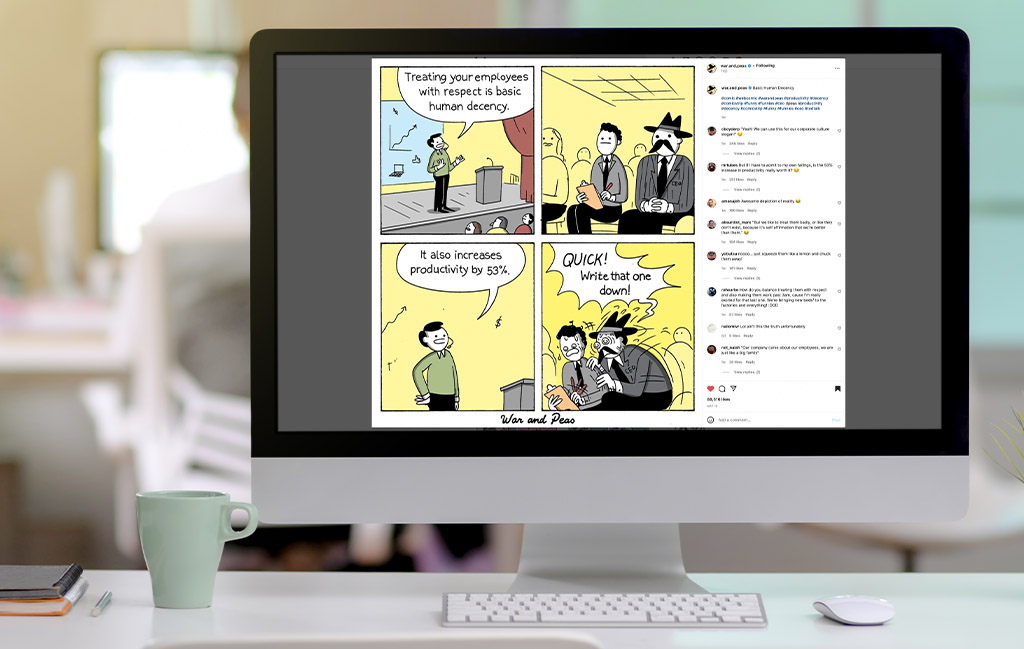
How has the pandemic affected employee turnover? Did you have to let anyone go because they could not manage working from home?
We made a management decision not to lay off existing employees during lockdown, as it would have been very difficult for them to find another job. Since the pandemic, we have even hired new employees, signed their contracts and sent them new company laptops without meeting them in person. That requires a lot of trust!
What flexitime arrangements have you introduced? Did your employees expect working from home to become a permanent option at your company?
A company has to offer this flexibility. We are fortunate that our employees are organized into Scrum teams that decide independently what their working hours look like and which in-person meetings are necessary.
„According to a survey by the auditing firm EY 81 % of employees said they no longer want to work in the office every day of the week.“
Elon Musk has just told all Tesla employees to come back to the office full-time, or they should quit. And Apple Inc. generated bad PR last year when it instructed its employees to return to the office on three fixed days per week, but some employees were offended that their need for more flexibility had been ignored by management, and they complained very publicly. How does STRG align the needs of its employees with management’s objectives?
We had a major discussion in 2018 and 2019 about management’s inflexibility. Now I greatly appreciate that our employees give management feedback openly and directly, but three or four years ago I thought they were crazy to criticize me: „How dare you speak against the king? You will end up in prison!“ I have since realized that we have a really good team and that 99 % of their criticism is exactly right and needs to be addressed.
„If management doesn’t follow the rules, how can we expect our teams to do so?“
Recently I made the mistake of asking a team member to contribute his expertise at a client meeting. Both he and his team were very upset that I had bypassed the Scrum structure we had introduced, and I realized that I had not followed the rules we had all agreed on. If management doesn’t follow the rules, how can we expect our teams to do so?
Has the pandemic changed the way you evaluate employees?
Because we could not hold our annual offsites, we conducted two or three one-on-one conversations with our employees – usually two managers met with each team member – to find out how each individual was coping and how committed he or she was to the company, the team and the projects. It is also necessary to understand each employee’s personal circumstances so that we can respond more appropriately to problems as they arise.
What was the goal of these conversations?
The point was to get a sense of the individual and give him or her the opportunity to raise any relevant personal or business topics. Almost all employees gave us positive feedback on how we managed the pandemic situation, in terms of economics, team culture and virtual interaction. As software developers, we know that our most important asset is the know-how of our employees.
„If you are attractive to employees, you are also attractive to customers. If no one wants to work for you, no one will want to buy your product either.“
Does offering flexitime make STRG a more attractive employer and therefore also more attractive to customers?
That is my philosophy: if you are attractive to employees, you are also attractive to customers. If no one wants to work for you, no one will want to buy your product either. Our values emphasize customer service – when customers need to contact us, they need to know it will be a positive experience, not worry that they will be harassed by a disgruntled employee.
Are you concerned about cybersecurity breaches arising from working from home?
All of our office work is stored in the cloud and accessible only via a highly secure VPN tunnel. Everyone uses company hardware, not their own. The advantage we have over other companies is that our employees are all technology geeks – they spot a phishing scam immediately and usually have better internet connections at home than we do in the office!
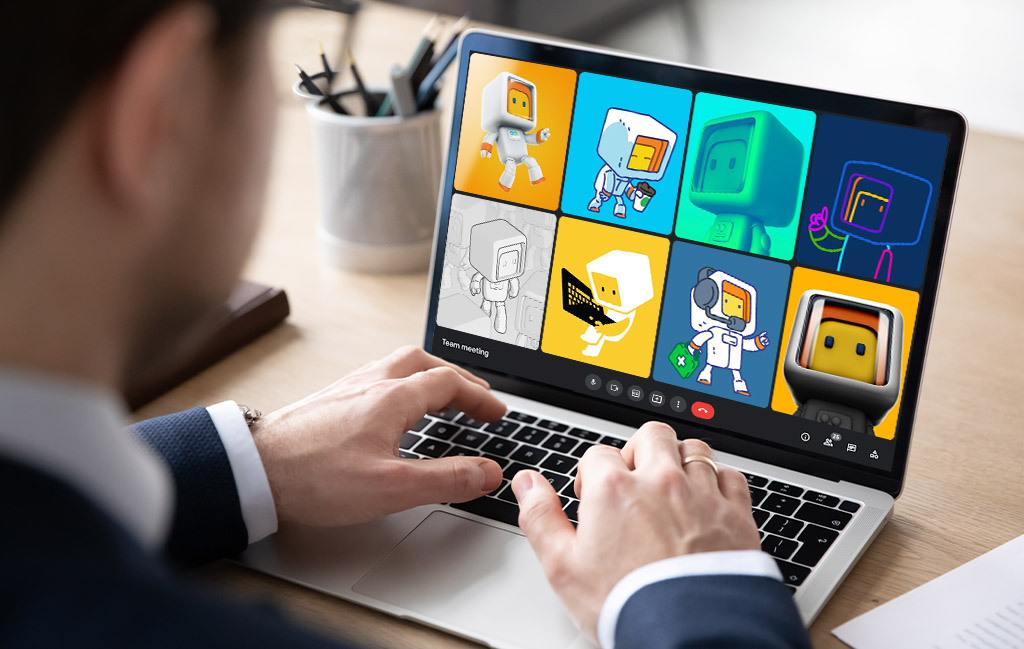
To Zoom or not to Zoom? That is the question. Are your meetings now hybrid - partly in the office and partly virtual?
The pandemic experience has taught us that a normal meeting is a virtual meeting and that in-person meetings are the exception. We hold in-person meetings only when it is necessary to work creatively together, this “action-oriented” concept: apart from such creative sessions and some client meetings, our other meetings are virtual, even if some participants are working on site.
„The experience with the pandemic has taught us that a normal meeting is a virtual meeting and that in-person meetings are the exception.“
Has the dynamics of meetings changed since they became virtual?
three-dimensional interaction in a physical space versus two-dimensional interaction on a screen. In virtual meetings, we have found that people only speak when they really have something to say, that they take less time to make their point, and that it is much easier for less assertive personalities to have their say because they all share an equally sized 2D frame on the screen. The quality of the meetings has improved as a result.
„I would never want to go back to ‘normality’, because that was not normal.“
What is the most important lesson you have learned from the pandemic?
As I’ve mentioned in previous posts and public lectures, I would never go back to “normality” because that was not normal. It was horrible – we were all stressed, flying around Europe for no good reason. I must have spent €30-40K per year on travel expenses. We used to have a motor pool so our staff could reach clients, but we’ve now sold off our fleet of autos. I used to pay for VIP status at the Vienna airport because I was there three times a week! I have hardly been there in the last two years and I haven’t missed a thing!
We need to learn from this difficult period and move forward to make the world a better place to live and work.